A balanced education from Nursery to P7
We nurture curiosity, build knowledge and develop essential life skills through a clear, well-structured learning journey.

The Government of Uganda curriculum
Our academic programmes follow the Government of Uganda curriculum, structured by the National Curriculum Development Centre (NCDC) and overseen by the Ministry of Education and Sports.
- UgandaGovernment curriculum
- NCDCCurriculum structure
- MoESOversight
How learning grows at St. Mary's
Confident early learners
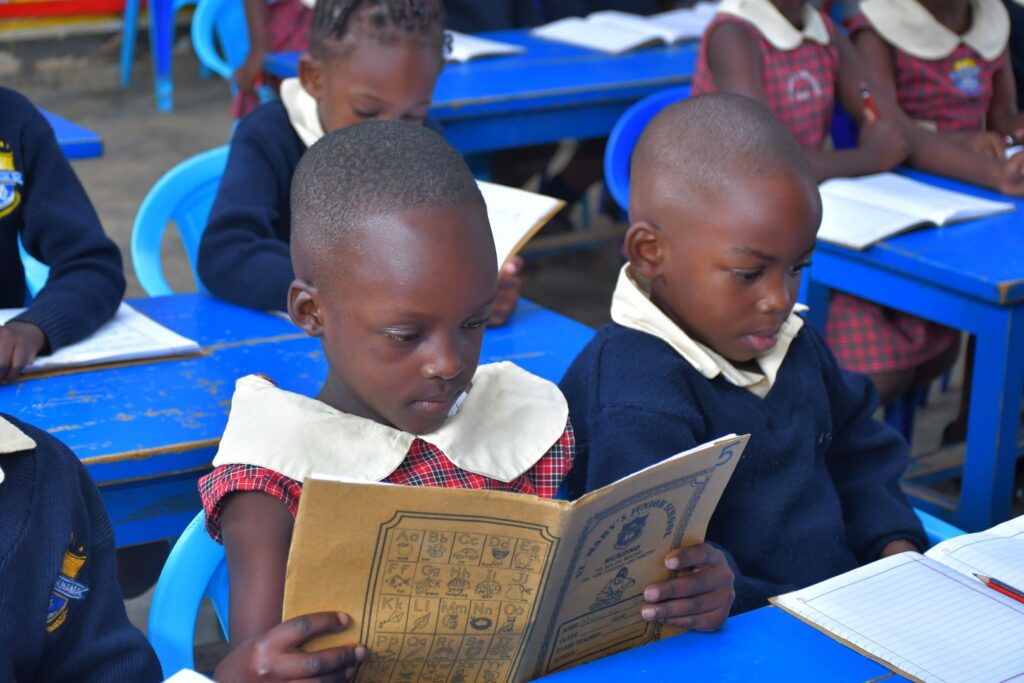
Our Nursery classrooms help children make significant developmental gains, communicate more successfully and work well both independently and in groups.
Learning focuses on problem-solving, responsive listening, language use, and social and collaborative skills, with activities that include reading, writing and mathematics.

Strong foundations
A thematic approach focused on basic literacy, numeracy and life skills, organised around themes such as Our School, Our Home, Weather, and Food and Nutrition.

Bridging into subjects
P4 is the bridge: learners move into English-medium instruction and from thematic learning to subject-based learning.

Preparing for PLE
A subject-based curriculum taught in English. The cycle culminates in the Primary Leaving Examination (PLE).
- English
- Mathematics
- Integrated Science
- Social Studies (SST)
- Religious Education (RE)
Measuring progress, preparing for PLE
Academic performance is measured through school assessments and national examinations such as the PLE, the national examination at the end of Primary Seven, administered by the Uganda National Examinations Board (UNEB).
The PLE format is transitioning from a traditional knowledge-based test towards competence-based assessment.
PLE examinable subjects
- English
- Mathematics
- Integrated Science
- Social Studies (SST)
Desks and seating
Desks grouped in small pods of four to six support teamwork, with flexible seating and clear walking lanes.
Dedicated learning zones
Reading corners, mathematics and science stations, and calm spaces.
Light and comfort
Classrooms make use of natural light and well-maintained lighting.
Accessible supplies
Everyday learning materials kept in clearly labelled, accessible storage.
Classroom culture
Positive agreements and respectful listening help every pupil feel heard and included.
Term dates for 2026
- Term I
2 Feb – 1 May 2026
Holiday2 May – 24 May 2026 - Term II
25 May – 21 Aug 2026
Holiday22 Aug – 13 Sep 2026 - Term III
14 Sep – 4 Dec 2026
Long holiday5 Dec 2026 – 31 Jan 2027
School hours
Primary School
8:00 AM – 4:30 PM
Pre-Primary School
8:00 AM – 12:00 PM

Give your child a strong start.
Ask us about available places in our Nursery and Primary sections, day and boarding.